



Meta Description: Compare lab grown diamond earrings by cut, carat weight, setting and comfort, with useful checks for buying a matching pair in the UK.
A pair advertised as one carat does not necessarily place a one-carat diamond in each ear. For matching studs, that figure usually means half a carat per stone. It is an easy distinction to miss in enlarged product photographs.
Lab grown diamonds earrings deserve a closer look than their headline specifications suggest. Stone proportions, setting depth and fastening design affect how a pair looks and feels.
Carat Weight Is Not the Same as Visible Size
Diamond carat measures weight, not diameter. A pair described as 1.00 carat total weight (ctw) typically contains two 0.50-carat diamonds, provided they are equally sized. If a listing simply says “1ct earrings”, ask whether that means per stone or for the pair.
Face-up measurements in millimetres are often more useful. Two diamonds of similar weight can look different in size because some weight sits below the visible surface. Request the width of each stone, particularly for oval, pear or cushion cuts.
A large stud may extend beyond a narrow earlobe or tilt forward if its setting is heavy. Comparing measurements with studs already owned offers a better sense of scale than a close-up photograph.
Matching the Pair Is a Separate Part of Diamond Quality
Brilliance depends heavily on cut and light return. Well-executed round brilliant cuts produce an even pattern of brightness and flashes of colour. More carat weight will not compensate for poor cutting.
Earrings introduce another detail: stones need to look like a pair. Compare face-up dimensions, colour appearance and sparkle. For oval diamonds, examine length-to-width ratios and dark areas through the centre. Identical reported weights and colour grades do not guarantee identical appearances.
Top clarity grades are not always necessary. Small inclusions invisible without magnification may barely affect the finished look. A well-matched pair can be a better use of the budget than two stones with exceptionally high clarity grades.
The Setting Decides How the Diamonds Sit
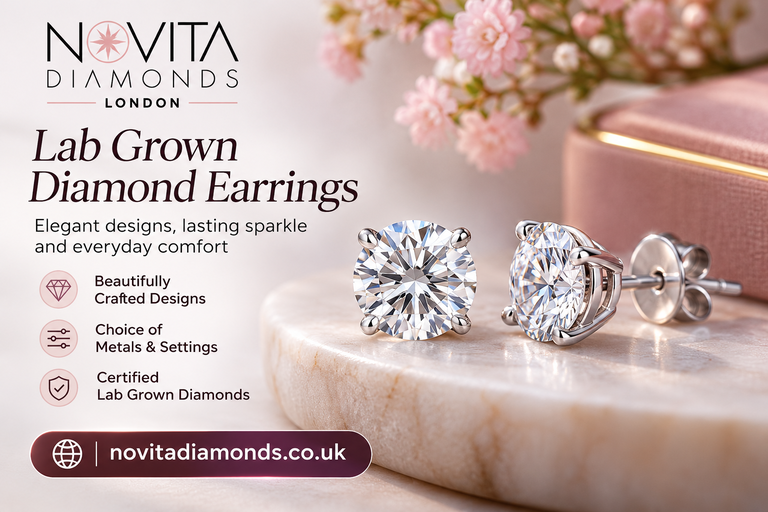
Four-claw studs expose much of the diamond, though raised prongs can snag on clothing. Bezel or rub-over settings surround the stone’s edge with metal, creating a smoother outline and adding protection against knocks.
Halos use smaller diamonds around a centre stone to increase the apparent size, but introduce extra settings to inspect and clean. A low basket can sit closer to the earlobe, while a tall setting may project forward.
Ask for a side-view photograph. It reveals basket depth, post position and how far the diamond sits from the ear, details a front-facing picture often hides.
Studs, Huggies and Drops Suit Different Routines
Studs work well for frequent wear because they have little movement, although raised halos and large solitaires can catch on scarves.
For huggie hoops, check the inner diameter rather than the outer measurement. A delicate-looking hoop may leave too little room around a thicker earlobe. Confirm that the hinge closes firmly and that the diamonds face forwards when worn.
Drops move with the wearer, reflecting light from changing angles, but their length and weight can cause discomfort over a long day. For a gift, standard studs are often easier to judge for fit than close-fitting hoops.
Metal and Fastening Choices Deserve Attention
White gold, yellow gold, rose gold and platinum change the appearance of the setting. White metals create a discreet border around near-colourless stones; yellow and rose tones add contrast. Some white-gold pieces are rhodium plated, so ask whether future replating may be needed.
Push backs are convenient but must grip the post firmly. Screw backs take longer to fit; locking backs offer another option. All require occasional checks for looseness.
Someone who often wears headphones may care more about post length, backing shape and setting height than a minor difference in diamond clarity. Comfort deserves the same scrutiny as sparkle.
Read Grading Paperwork With the Finished Pair in Mind
Lab-grown diamonds have essentially the same chemical, physical and optical properties as mined diamonds, although their origin differs. Independent reports help identify them. An International Gemological Institute (IGI) report may document measurements, colour, clarity and cut. GIA now uses Premium and Standard assessments for eligible colourless to near-colourless laboratory-grown stones rather than its previous natural-diamond-style grades.
Do not assume every tiny accent diamond has an individual report. Ask whether the paperwork covers each main stone, the finished jewellery or merely a stated product specification. A grading report does not establish the quality of the clasp or setting.
Retailers such as NOVITA DIAMONDS provide a starting point for researching lab created diamonds, but the actual pair still needs checking for matched stones, secure settings and suitable backs.
Practical Checks Before Ordering in the UK
Request the metal fineness, combined carat weight and measurements of the main stones in writing. Qualifying precious-metal jewellery sold in the UK must be hallmarked, although lighter pieces can be exempt. Hallmarks verify metal content, not diamond grades.
For an online order, check whether photographs show the actual earrings or a sample pair. Confirm delivery arrangements, return conditions and servicing options, especially for personalised designs. Ask how loose fastenings or misaligned posts are handled.
Before ordering, look closely at the earring construction. A beautifully graded diamond still sits awkwardly if its post is off-centre or its setting is too deep. Those details determine how often the finished pair will actually be worn.